


In early November 2025, a military helicopter descended on a strip of white sand in a protected coastal forest on the island of Bangka, Indonesia, to shut down an illegal tin mine.
The raid was part of a massive operation announced by Indonesian President Prabowo Subianto to crack down on illicit tin mining. In recent months, a military-backed task force has swept across the islands of Bangka and Belitung, targeting offshore dredging vessels, illegal smelters, and uncovering heavy machinery buried meters underground.
These islands, off the coast of Sumatra, are the source of almost a fifth of the global supply of tin, a commodity widely used in the tech and renewable industries. The industry was long known to be poorly regulated. But the extent of the rot became clear in early 2025, when executives at PT Timah, the state-owned firm that dominates the sector, were convicted of overseeing a multi-year, widespread corruption scheme to launder illegal tin into its supply chain.
On islands long scarred by illegal pits, dredgers, and a vast shadow market beyond government oversight, the sharp slowdown in illegal mining activities brought about by this crackdown was unprecedented.
But the crackdown is more than just a simple tale of a government finally prompted into enforcement against an errant industry. Through it, the government has handed more assets and control to PT Timah — the very company at the heart of the corruption scandal. And Timah, in turn, has been placed under the direction of a retired colonel.
The events in Bangka Belitung are part of a broader trend of increasing military involvement in Indonesia’s economy and government that has alarmed observers in civil society. They provide some insight into how this is playing out in practice: bringing order and control to a chaotic sector, but in a highly centralised form that may not lead to the change the beleaguered citizens of the islands hope for.
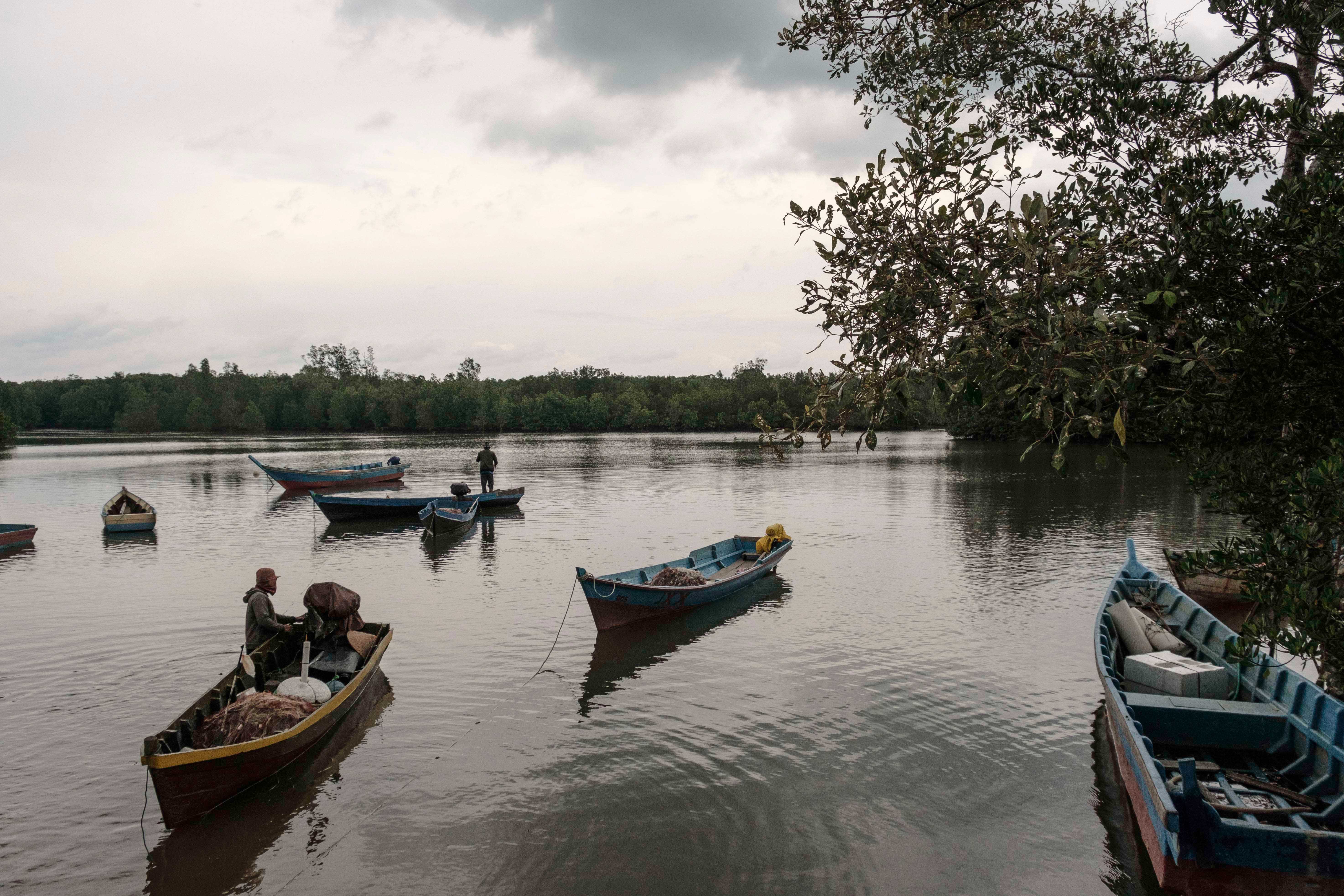
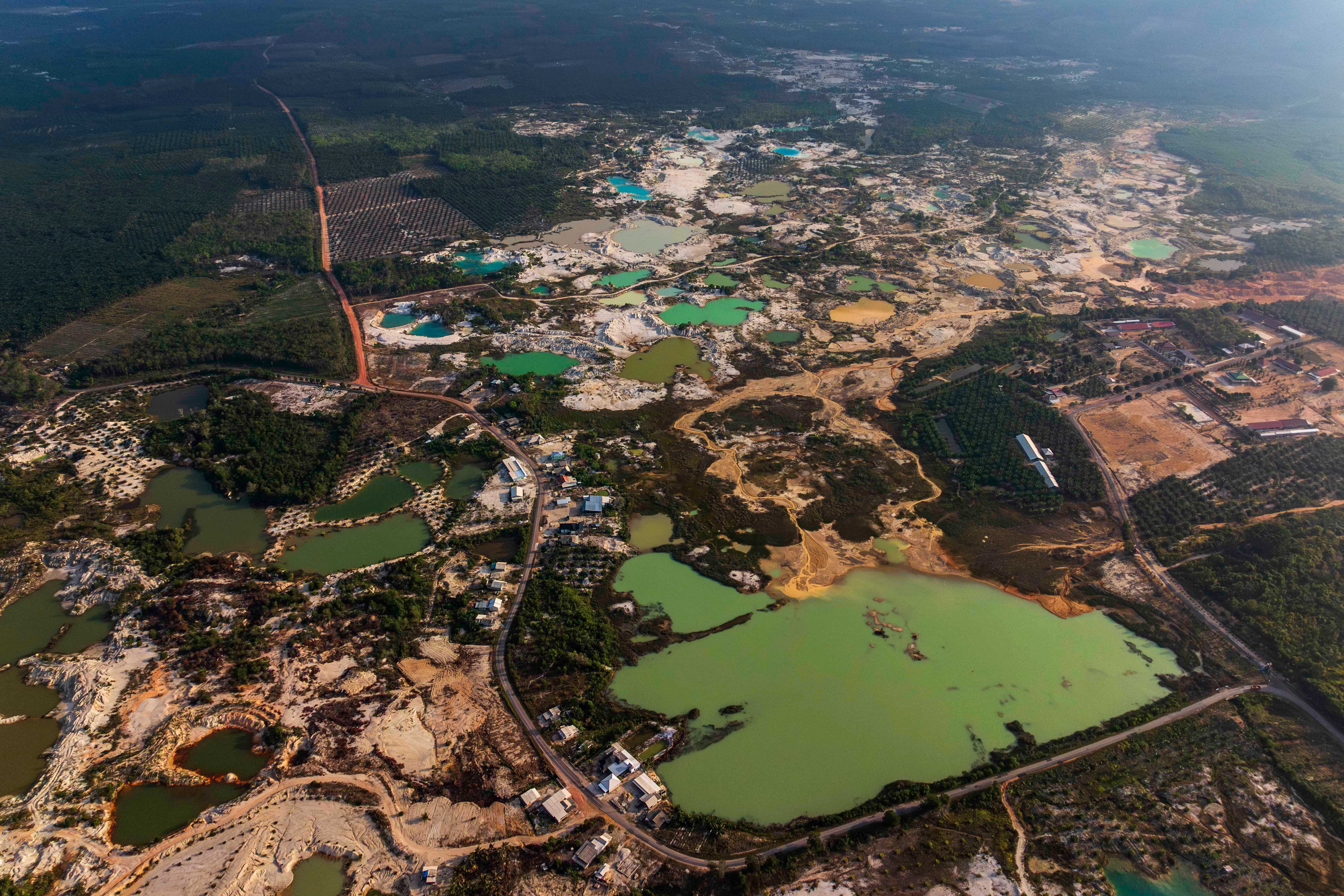
Tin has shaped the economy and landscape of Bangka and Belitung for over a century. In 2024, Indonesia was the world’s second-largest producer of tin, and most came from these two islands. PT Timah is by far the dominant player in the region — operating mines on land, dredging coastal waters, buying from small-scale miners, as well as processing raw materials.
An investigation launched by the Attorney General’s Office in 2023 found that Timah’s leadership had allowed unlicensed miners to operate in its concessions and sourced tin from others mining in protected areas. Timah had issued fake contracts to disguise payments for illegal ore, using shell companies it established as intermediaries. Its former president director and finance director were jailed in late 2024, along with owners of the companies they had cut deals with. But Timah itself faced no consequences as a corporate entity.
An investigation published last year by The Gecko Project suggested tin from illicit sources continued to reach Timah even after the arrests had been made. It also found that global companies — including the giants of the tech world — had been alerted to the proliferation of illegal mining and environmental harm on Bangka Belitung more than a decade ago, but had kept Timah in their supply chains.
President Prabowo vowed to crack down on illegal mines and oil palm plantations that had encroached on forests in his inaugural address to parliament, last August. A military-backed taskforce first reportedly seized more than three million hectares of plantations, according to the president, then turned its attention to mining.
At an address to the Prosperous Justice Party (PKS) Congress on September 29, Prabowo said he had ordered the military and police to begin a large-scale operation targeting Bangka Belitung, where he claimed there were “1,000 illegal mines”.
“I have ordered that these be immediately brought under control,” he said. “The illegal mines cleaned up, or taken over by the state."
A week later, on October 6, Prabowo presided over a ceremony in Pangkalpinang, on Bangka Island, where Attorney General S.T. Burhanuddin formally handed over assets that had been seized as part of the corruption investigation to PT Timah. The haul included stockpiles of tin, land, cash and six smelters — valued by the government at seven trillion rupiah, some $420 million. It also included rare earths, which Prabowo described as “likely much greater” in value than the smelters.
Timah — the nexus of the corruption scandal — was presented as the agent of an industry clean-up.
“Many observers say this amounts to nationalisation by another name,” said Made Supriatma, visiting fellow at the ISEAS - Yusof Ishak Institute, whose research focuses on the role of the military in Indonesia. “But the risk is that this is not acknowledged as nationalisation; Prabowo frames it instead as a law-enforcement issue. All of this is driven by political factors, it has nothing to do with economic reasoning.”


When the crack-down on mining was announced in August, a senior prosecutor at the Attorney's General Office said the idea was to handover the seized assets to state-owned entities for “temporary management”.
But observers see it as part of a broader strategy by Prabowo to assert greater state control over natural resources, and to provide the military with a key role in managing them. A move in keeping with the increasing role he has given the military across government, amid democratic backsliding and an “authoritarian tilt”.
Over the course of 2025, former high ranking military officers were appointed to key leadership positions across Indonesia’s state-owned mining companies. For Timah it was Restu Widiyantoro, a retired army colonel, who was awarded the honorary rank of Brigadier General by Prabowo a few days before he handed over the smelters.
At a recent mining conference, a Ministry of Defence official explained that its role in the critical mineral sector was to create a “safe environment for development and investment”, according to a ministry account of the event.
“What we’re seeing is a pattern — a centralisation of command under the state, enforced through military power,” said Made Supriatma.
In Bangka Belitung, the government crackdown has provoked opposition, some cautious support — and concern over what happens next.
The president’s visit coincided with large protests outside PT Timah’s headquarters. A large crowd of small-scale miners rallied against the newly formed Halilintar Task Force — a joint enforcement team formed by the government that includes military personnel — which had arrested dozens of tin collectors accused of smuggling. Indonesian media reported that it turned violent and police fired tear gas and used water cannons to disperse the protestors.
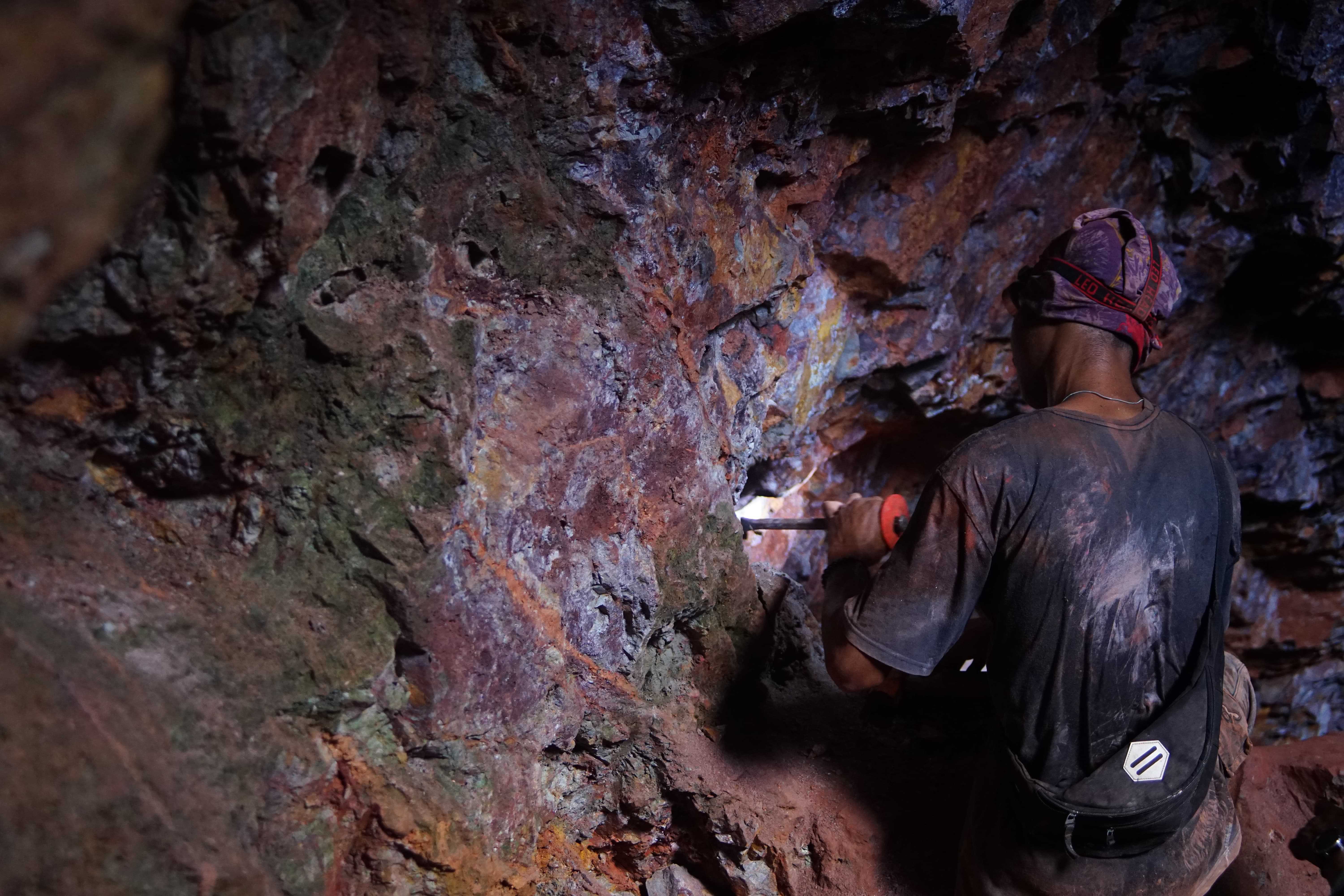
Prior to the crackdown, artisanal miners looked for tin wherever they could find it — in pits carved into the rock on land, or ramshackle dredgers that scoured the seabed. They sold it to collectors — essentially middlemen — who then passed the ore to smelters. Some also sold directly to PT Timah.
This unlicensed, and dangerous, practice was widespread and had long been tolerated. It was both a defining feature of how tin mining operated in Bangka Belitung and a crucial source of income for many of the island's families. For now, the crackdowns have left them out of work.
“There are no jobs left,” said Ari, a miner from Gantung, East Belitung. “Life is getting harder for us, the pit cave that I used to mine is also closed. They crack-down without thinking about small people who depend on tin mining.”
He argued that the government should not only “punish the small people”, but provide opportunities to earn a living that does not harm the environment — with permits, training on safe mining practices, and a fairer price for their tin.
“Don’t leave us with nothing and then blame us,” he said. “We are taking resources from our own land, but so much tin leaves Bangka Belitung, and almost nothing returns. Our resources are taken away, leaving us with very little.”
PT Timah says its agenda is to improve how the sector is managed. Restu, its president director, told a parliamentary commission it is working with cooperatives to legalise mining by these artisanal miners in its licensed areas; bringing them into a formal system in which they sell solely to Timah. It also wants to develop its own products, moving downstream and capturing more of the value in the tin supply chain.
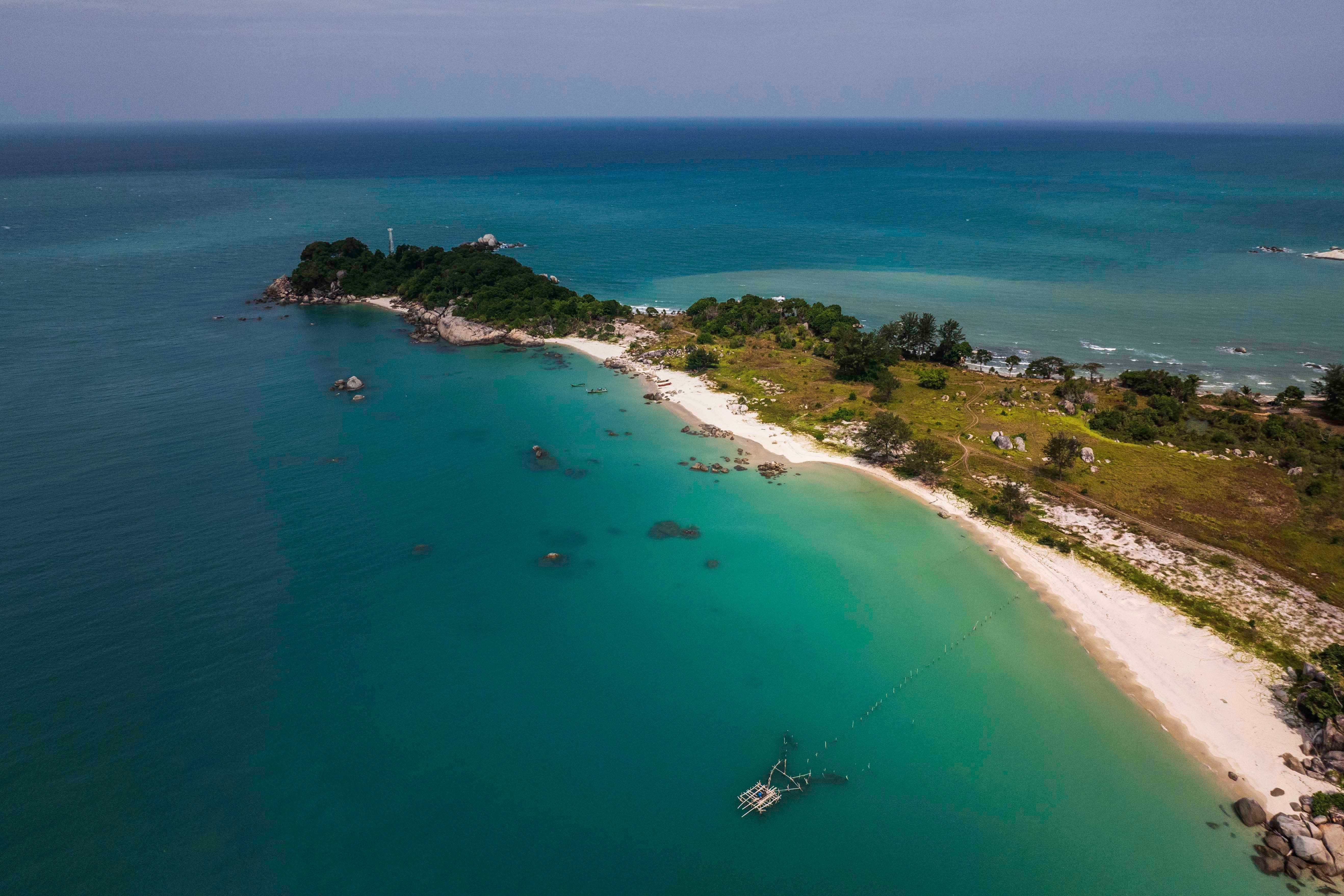
In Batu Beriga, local activist Prasetya Jorghi said the cessation of unregulated mining has brought relief. “The environment can breathe a little,” he said. But concerns persist over offshore mining that Timah is still pursuing.
Timah holds an as-yet unused license to mine in the waters off the coast of Batu Beriga, home to species like green sea turtles. Residents have staged protests calling for the revocation of the license and for the area to be designated a no-mining zone to protect fisheries.
In October, Timah president director Restu promised the firm would not mine without community consent. But a regulatory disclosure the same month indicated that among its priorities for the next year is to open three new offshore sites, including Batu Beriga.
Jorghi noted that residents of Bangka Belitung have opposed the legal mining of large-scale operations like Timah, that have wrought so much environmental damage, not only the unlicensed operators. “The governance reform is good,” he said. “Confiscating heavy equipment, classifying tin collectors as illegal miners. These reforms are quite real.”
“The current concern is that once illegal mining has been cleared up, companies will expand their concession areas,” he added. “And many of those areas are the source of many conflicts with communities."
Reporting by Nike Shabrina
Editing by Tom Johnson
Header image by Nanang Sujana